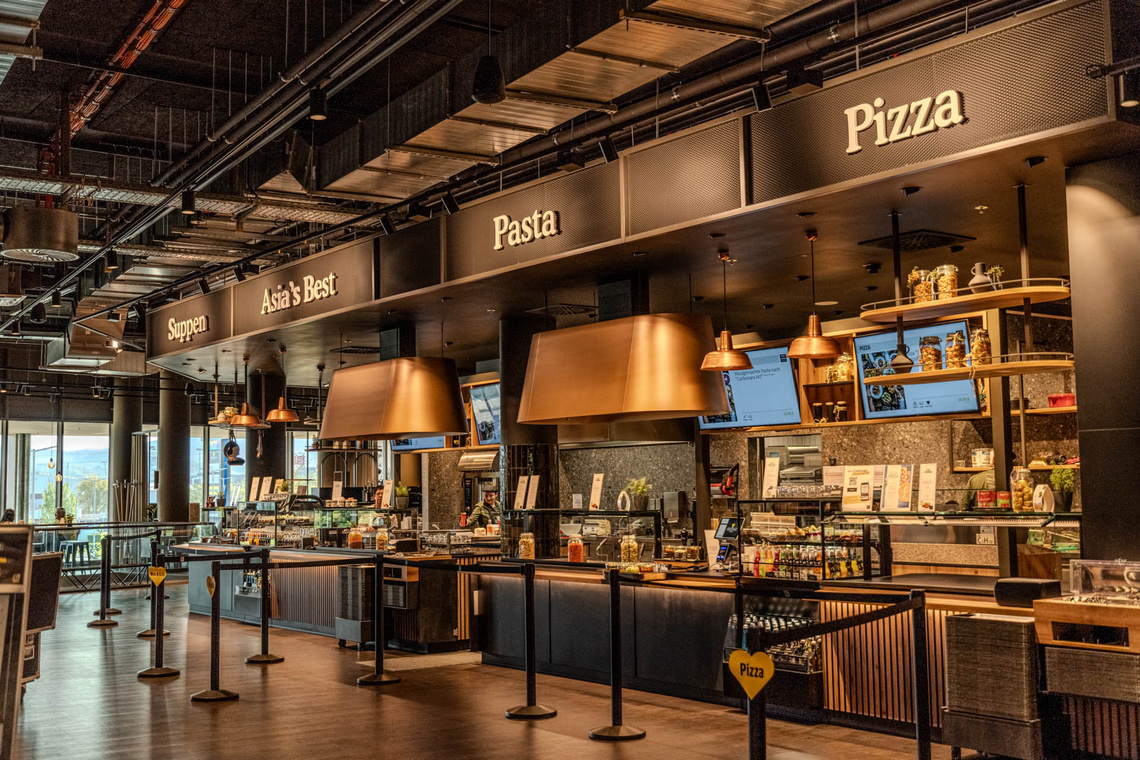
As midday approaches, the Herzplatz starts to buzz with activity. Staff from the Edeka Südwest service centre upstairs are coming down for lunch, shoppers are lingering over a coffee or salad bowl, and people from nearby offices are making a beeline for the serving counters. Pasta is cooked fresh to order, the pizza comes hot from the oven, and there is a wide range of wok meals, salads, one-bowl meals and regional dishes. It's certainly a step above standard workplace catering. Variety and quality are the key, while still retaining the relaxed lunchtime vibe.
MORE THAN JUST LUNCHES
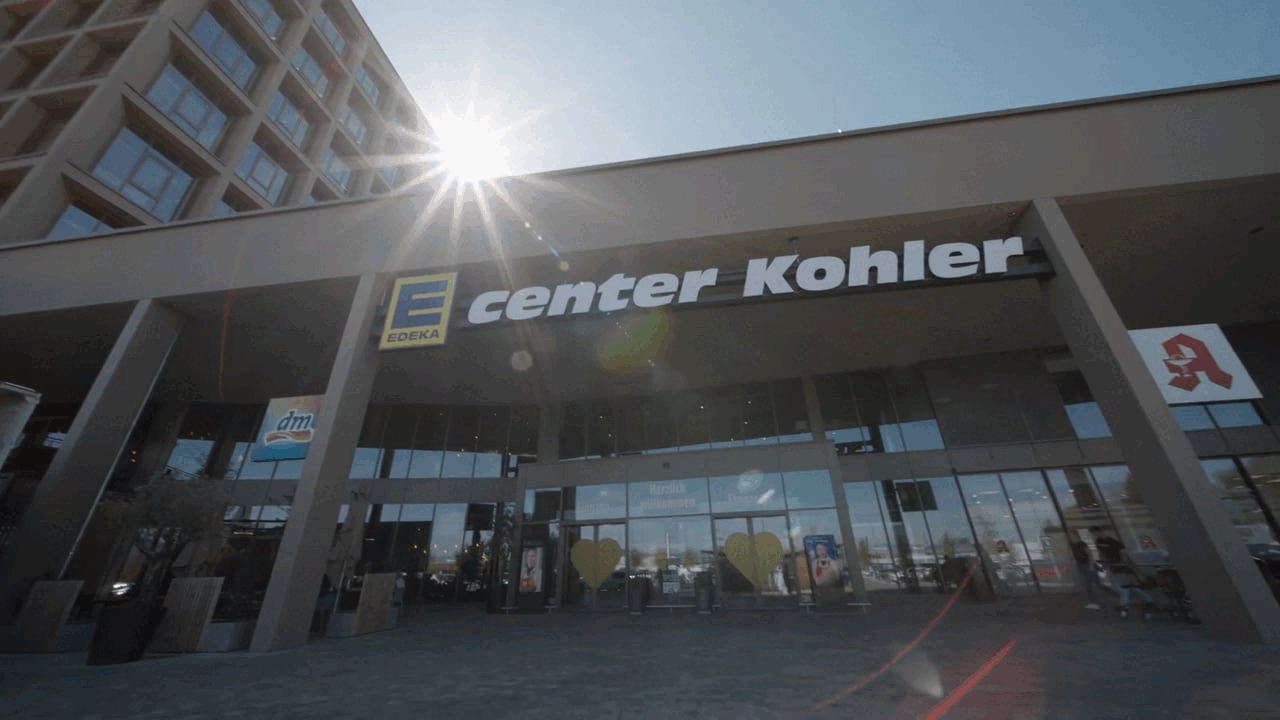
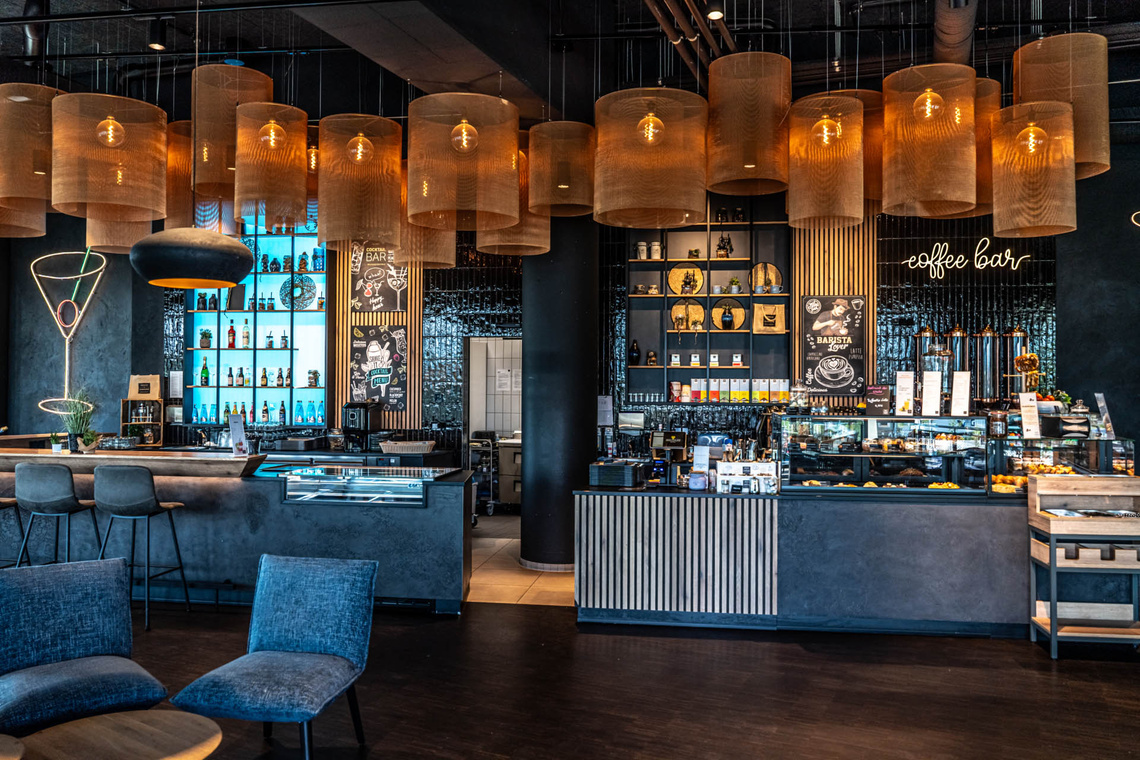
Since it opened in February 2025, the Herzplatz restaurant at the E center Kohler supermarket in Offenburg has been showing what role food service could play in retail settings in the future. It's a company restaurant, lunch spot and coffee bar all rolled into one, and the perfect place to unwind. Traditional restaurant seating shares the space with comfy furniture in quiet corners, where people can work or simply relax and watch the world go by. The open-plan design creates a visible link to the supermarket, without spoiling the restaurant's calm, quiet atmosphere. It doesn't look like a canteen – and it certainly doesn't feel like one.
The Herzplatz is run by Genuss und Harmonie, a company that prides itself on cooking fresh, high-quality meals. Convenience products play no part here. Instead, the restaurant offers a changing selection of freshly prepared daily dishes served at five different themed counters. It's an approach that's paid off: the Herzplatz has been named one of Germany's 50 best staff restaurants. Its popularity is also reflected in the figures: the kitchen was planned for around 170 meals a day; it now serves 350 on average, and more than 500 when things get busy.
FINELY TUNED WAREWASHING OPERATIONS
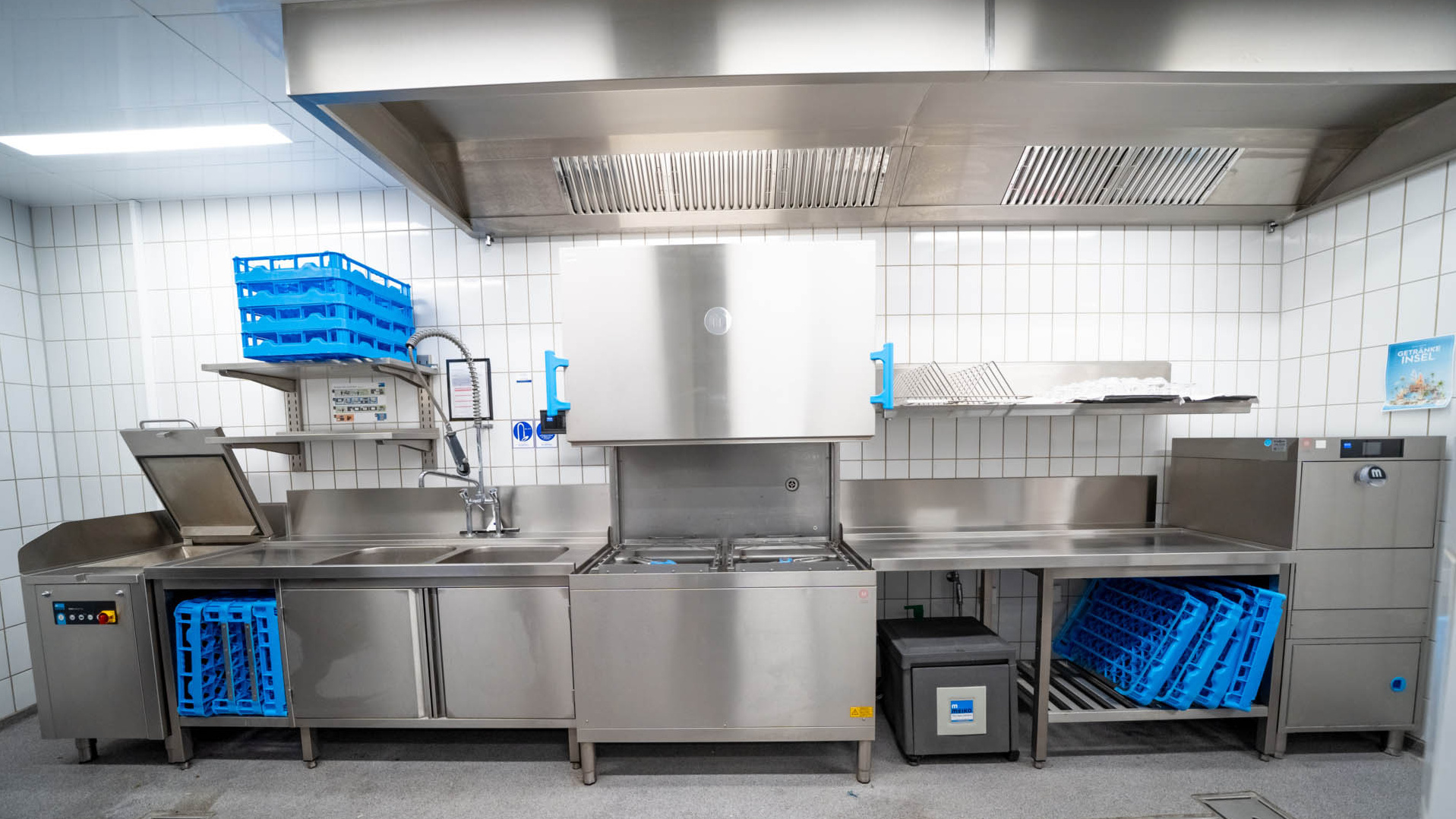
With high volumes and a tight schedule, the task for the restaurant team is to keep everything running smoothly even at peak times. That means getting every tray, plate, glass and pan back into circulation as soon as possible. That's why the dish return point in the Herzplatz is so compact and clearly organised. After their meal, guests deposit their used crockery on return trolleys, which roll straight into the wash-up area through a flap door. This avoids any unnecessary back and forth, maintains a clear division between the restaurant and the warewashing area, and keeps dirty dishes well clear of the other kitchen workflows.
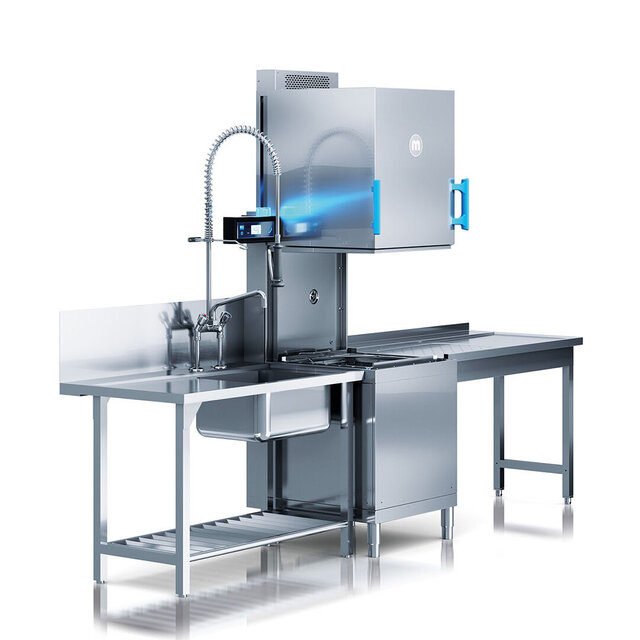
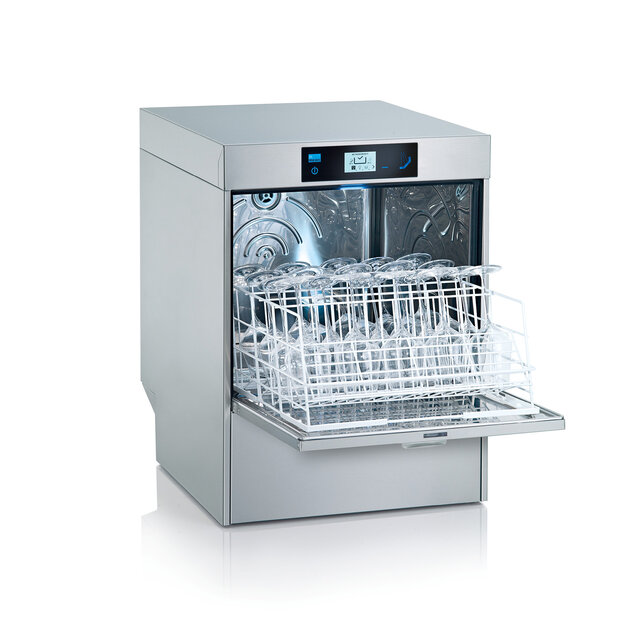
The next steps are handled by MEIKO's warewashing systems. A M-iClean HXL double rack dishwasher and two M-iClean U undercounter dishwashers quickly get dishes and other ware back into use, even at busy times. The key lies not only in the individual machines, but in how this technology slots so neatly into the space and workflows. Guest numbers may have risen sharply, but the team still works in the same wash-up area with the same number of staff and no extra space.
All the more remarkable, given how limited the space was from the start. "The dish return and wash-up area is extremely tight," says Andreas Geiß, Head of Sales for Specialist Store Formats at Edeka Südwest. Two years went into planning the best configuration, discarding and rethinking ideas, and optimising the available space.
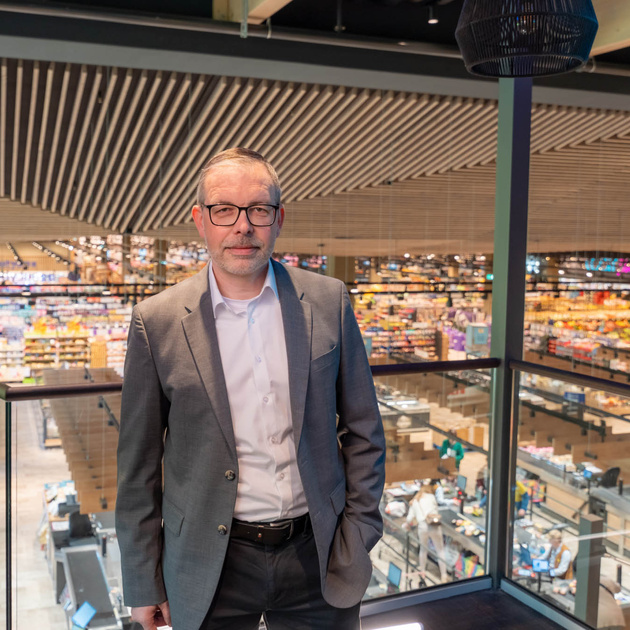
MEIKO got involved very early on. They were motivated, ambitious, and not afraid to push us a bit.
Andreas Geiß, Head of Sales, Specialist Store Formats, at Edeka Südwest.
EFFICIENT SOLUTIONS REPLACE BINS
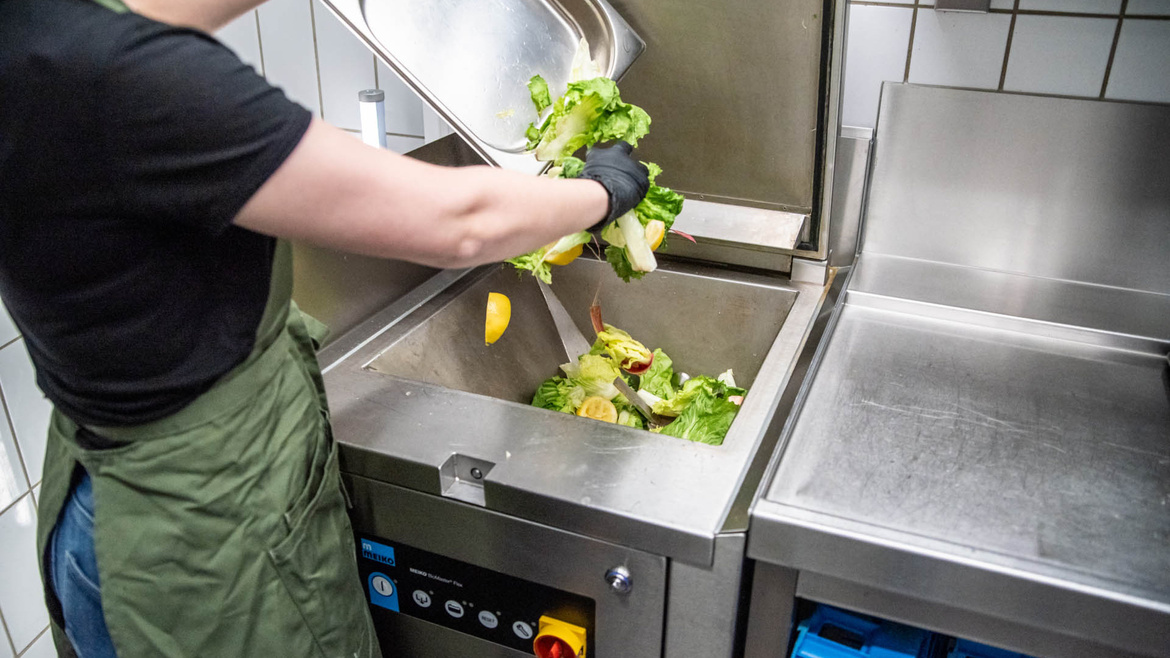
This close coordination with MEIKO produced a solution that is perfectly tailored to the way the Herzplatz restaurant runs. Everything slots together, from dish return and pre-sorting to warewashing and food waste management. At the heart of it is the BioMaster® Flex from MEIKO. The kitchen receives over four kilograms of leftovers each day, plus the scraps from food preparation. Rather than collecting this waste in bins, the team tips it straight into the BioMaster® Flex's infeed station in the wash-up area, where it is shredded and homogenised. The resulting biomass can then be pumped through the permanent network of pipes into a 3,000-litre collection tank on the ground floor.
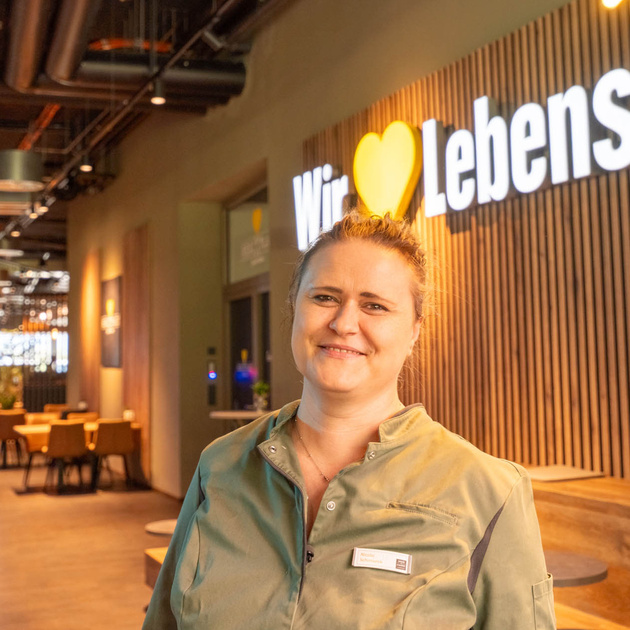
It makes a real difference to the team in their day-to-day work. No heavy containers, no need to lug bins through the kitchen, fewer unpleasant odours, and better hygiene.
Nicole Schimurek, F&B Manager at Genuss und Harmonie
The tank only needs emptying twice a month, unlike bins that would otherwise have to be collected several times a week. "It's a much cleaner set-up that's much better for our staff," says Schimurek.
It's also better for the business. “A food waste management system can really pay off financially. What matters is that it’s implemented properly and tailored to your operations. Most of the gains lie in labour and disposal costs," says Geiß. That's why the Herzplatz is also a pilot project, a starting point for testing – under real working conditions – how and where food waste management can be systematically rolled out and steadily improved with MEIKO's support.
The Herzplatz takes Edeka Südwest's "We love food" motto beyond the shop counter and into the world of freshly cooked dishes, local ingredients and tasty offerings in a welcoming and comfortable environment. It's an in-store restaurant that delivers exactly what its name suggests: a place where people can come together and enjoy hospitality with real heart.